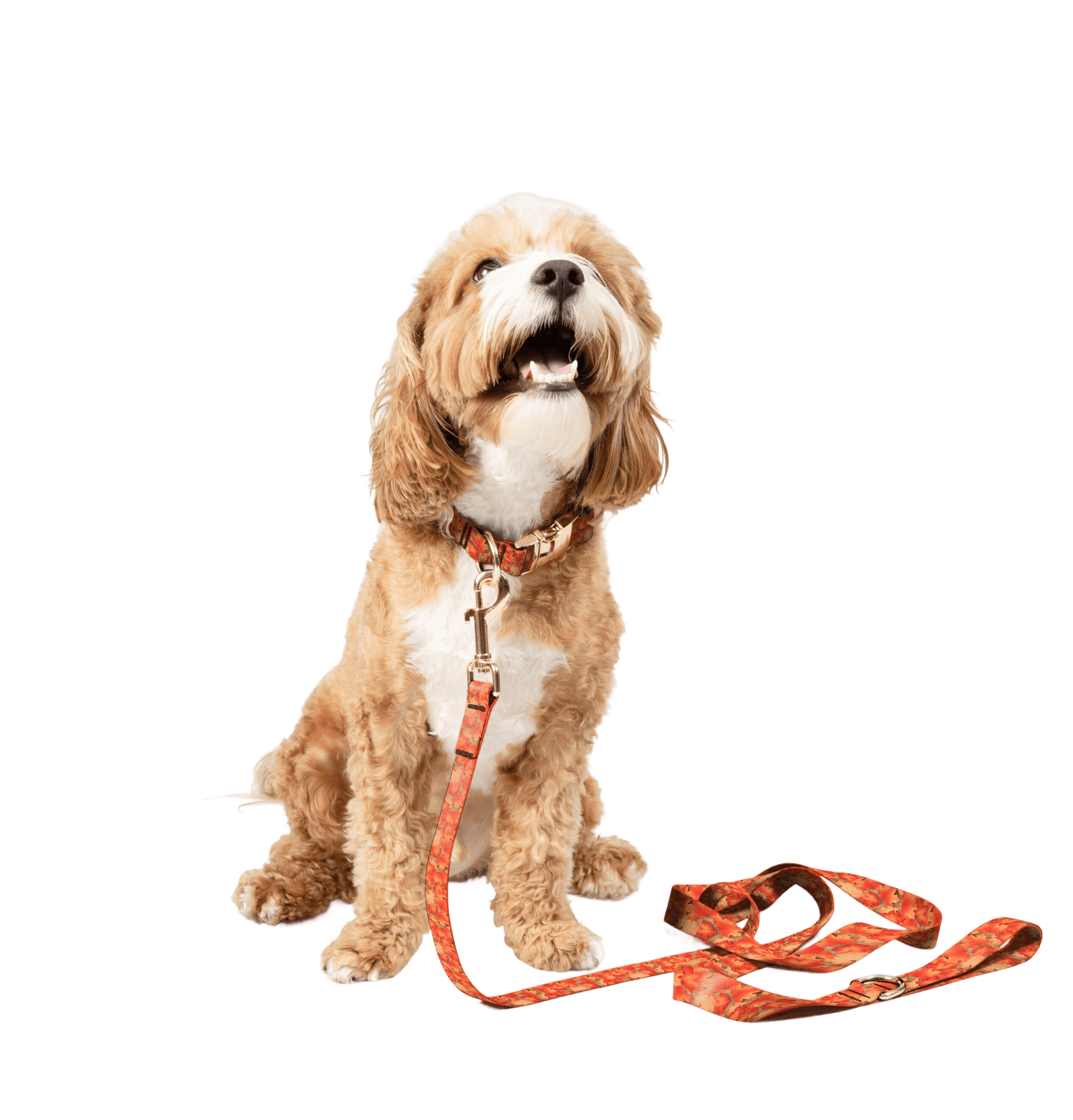
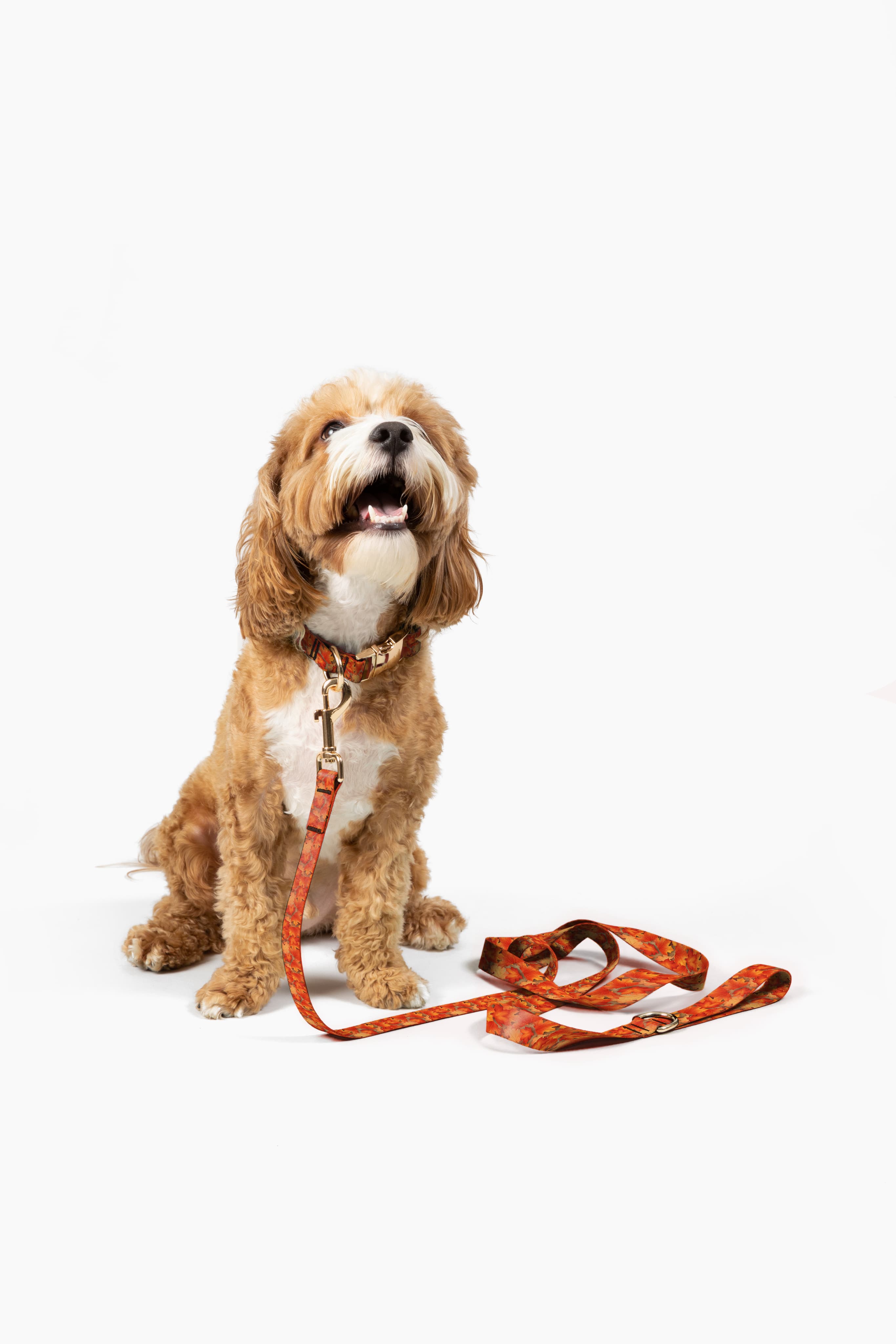
What is walkware? A field guide to better dog gear
Walkware is the gear your dog wears every day. Here's what 'better' really looks like — in materials, in fit, in the hardware nobody talks about.
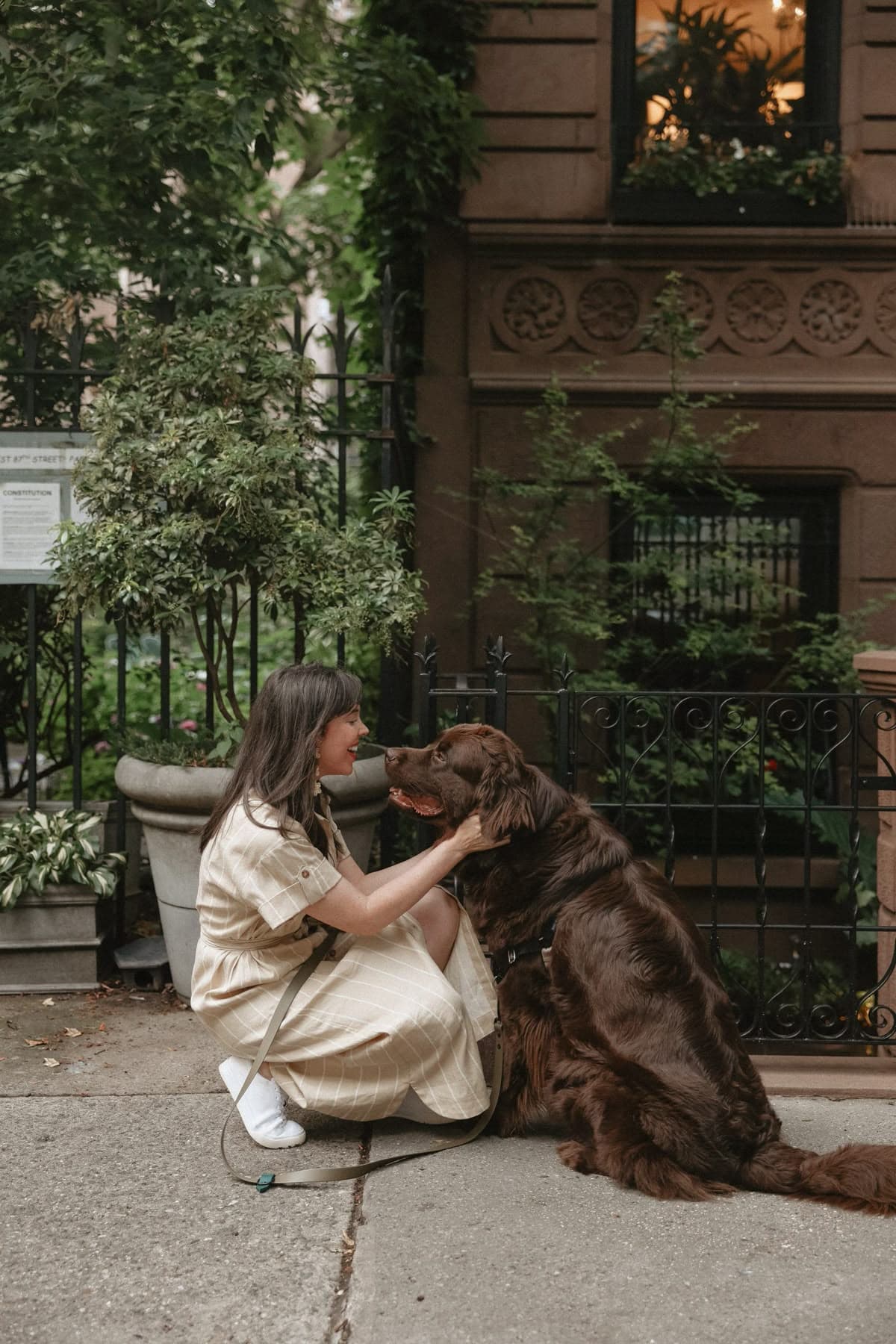
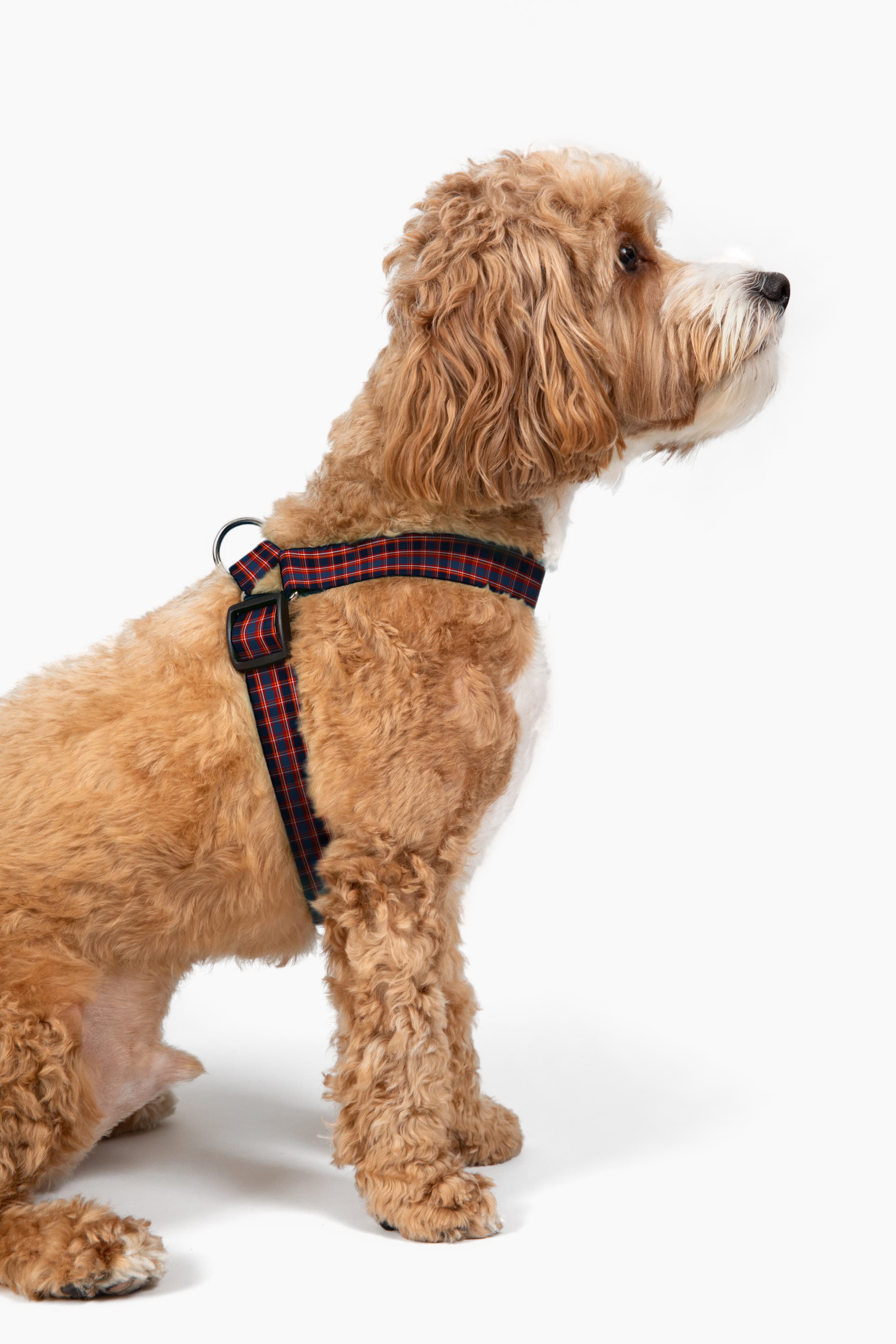
We coined the word walkware for the same reason "workwear" exists for jeans and boots: it's a different thing than fashion. Walkware is the gear your dog wears every day and on every walk — the collar, the harness, the leash. The pieces that take real wear, in real weather, on a real dog who doesn't care about anyone's brand.
Here's what we've learned about what separates good walkware from forgettable walkware. No marketing — just what holds up.
Material matters more than the marketing
The two most common materials in dog walkware are nylon webbing and leather. Both can be excellent. Both can be terrible. The label doesn't tell you which.
Good nylon walkware:
- Solid weave (not flat, cheap "ribbon" webbing)
- UV-stable thread that doesn't yellow or weaken in a year
- Edges that are heat-sealed cleanly, not melted into stiff lumps
- A weight matched to your dog (heavy webbing on a small dog is uncomfortable, light webbing on a 70-pound dog will fail)
Good leather walkware:
- Vegetable-tanned, not chrome-tanned (vegetable-tanned ages into a soft patina; chrome-tanned stays stiff and cracks)
- Full-grain — the top layer of the hide, not a split or bonded reconstitution
- Stitched with bonded nylon or waxed thread, not glued
- Edges burnished or beveled, not raw
We use vegetable-tanned bridle leather for our collars and most of our leashes. It's slower to break in and costs more upfront — and it's still the cheaper option over a 10-year horizon, because the cheap nylon collar you replace twice a year adds up.
Hardware is where products quietly fail
Nobody photographs the buckle. But the buckle is what fails first on most dog gear. Things to look for:
- Solid cast hardware, not stamped sheet metal. Pick up the buckle. It should feel weighty.
- Brass or stainless steel for outdoor and saltwater dogs. Zinc alloys corrode fast in salt air.
- Tongue-buckle or heavy-duty side-release. Plastic side-release buckles are fine for small dogs and acceptable for medium ones. For large or pulling dogs, plastic is a liability.
- Welded D-rings. A leash clip that catches on a single weld point on a stamped D-ring is one good tug away from a runner dog.
If a brand doesn't tell you what their hardware is, it's probably zinc.
Fit is half of comfort
The most beautiful walkware in the world will rub your dog raw if it doesn't fit. We've written more on this in our sizing guide, but the principles:
- Adjustment range matters. A collar with one set of holes is a problem waiting for your dog to gain or lose three pounds. Look for at least 3–4 inches of range.
- Width should match the dog. A 1-inch collar on a 70-pound mastiff concentrates too much pressure. A 1.5-inch collar on a Chihuahua is comically heavy.
- Padding goes where it presses. A harness should be padded at the chest plate. A collar doesn't need padding if the leather is supple — overdone padding traps heat and dirt.
Built for repair, not replacement
This is the part nobody talks about. Walkware should be repairable. A broken buckle should mean a new buckle, not a new collar. A frayed leash handle should be a $15 fix, not a $90 replacement.
We design our walkware so the hardware can be swapped, the stitching can be redone, and the leather can be re-conditioned for as long as you want to keep it. That's not a feature, it's the whole point.
So what is Amu walkware?
Custom-fit. Hand-stitched in small batches. Vegetable-tanned leather and solid brass hardware on our heritage line, marine-grade nylon and welded steel on our performance line. Designed to be the last collar, harness, and leash you buy for the dog you have right now.
Made for the bond. Built to last.