Harness vs collar: which is better for your dog?
Not a debate, a decision tree. Here's when a harness is the right call, when a collar is, and why most dogs do best with both in rotation.
This is the question we get asked the most. The honest answer: most dogs do best with both — a collar they wear daily for ID and a harness for walks. But that's not always practical, and the right primary piece depends on your dog.
Here's the breakdown.
The case for a collar
A collar wins on simplicity. It's already on. You clip the leash and go. No stepping into anything, no buckles to find in a hurry, no fur to flatten.
Collars are right for:
- Calm, leash-trained adult dogs who don't pull and have good recall.
- Daily ID and tag carrying — every dog needs this, even harness-walkers.
- Quick yard trips, bathroom breaks, neighborhood loops.
- Dogs with skin sensitivities in the chest and armpit area where harness straps sit.
Collars don't work well for pullers, escape artists, or dogs with respiratory issues (more on that below).
The case for a harness
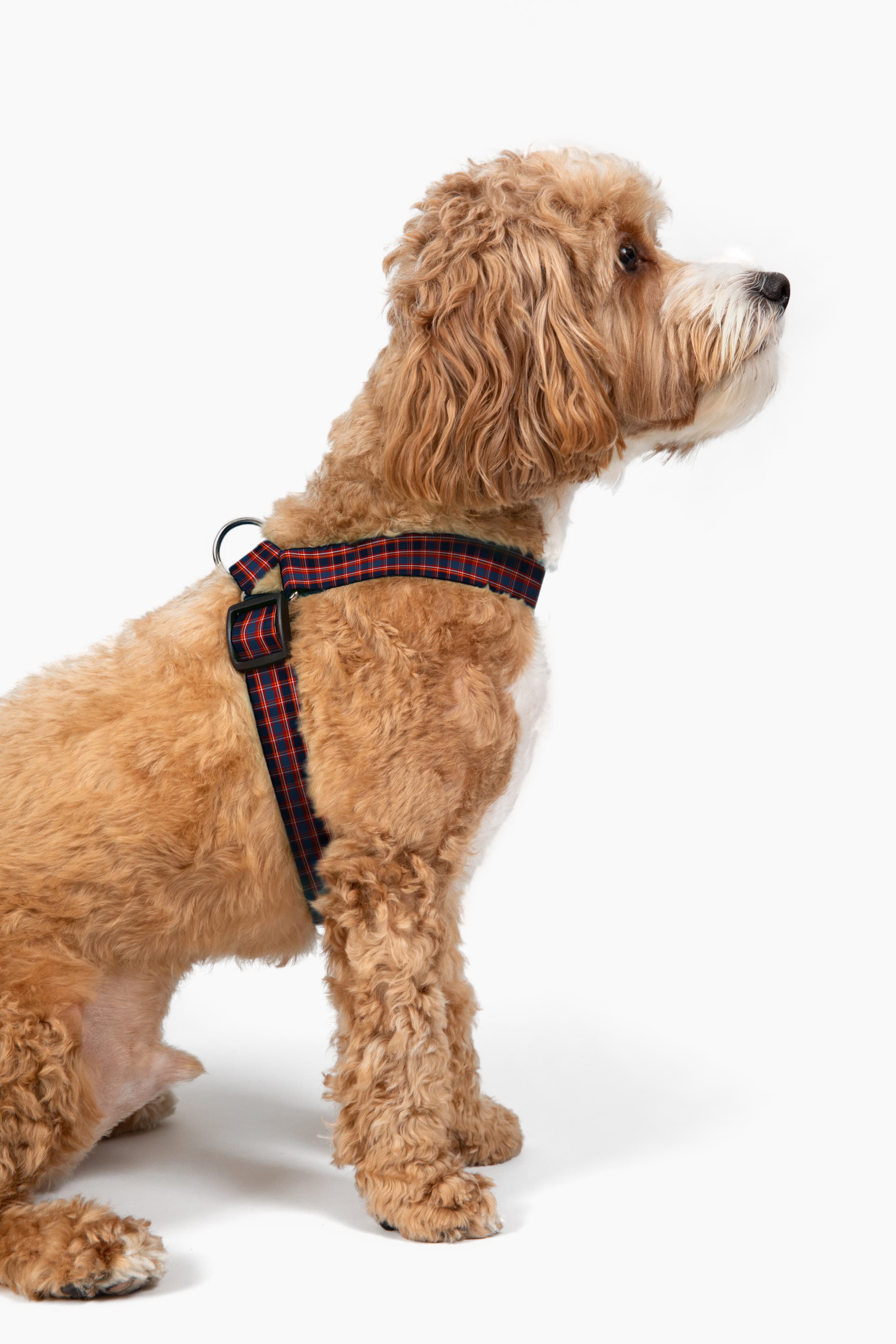
A harness distributes pressure across the chest and shoulders instead of concentrating it on the neck. That matters more than people realize.
Harnesses are right for:
- Strong pullers. A collar on a puller is just rope-burn for the throat. A well-fitted Y-front harness gives you control without choking pressure.
- Brachycephalic breeds (pugs, French bulldogs, Boston terriers, boxers). These breeds already have narrow airways. A collar that pulls against the trachea is a real health issue.
- Sighthounds and slim-necked breeds. Greyhounds, whippets, and Italian greyhounds can slip a collar over their head in a panic. A harness can't be backed out of.
- Dogs with neck or spine issues. Older dogs, or dogs recovering from injury, benefit from spreading the load.
- Puppies in training. You're going to have a lot of leash corrections in the first year. A harness keeps those corrections off the developing trachea.
- High-energy adventure dogs doing trail runs or off-leash sports where you might need a sudden grab.
What about no-pull harnesses?
"No-pull" usually means a front-clip design — the leash attaches at the chest rather than the back. When the dog pulls, the geometry turns them sideways instead of giving them leverage forward. It's a training aid, not a magic fix. It works best paired with actual loose-leash work (we have a guide for that).
Back-clip harnesses are more comfortable for relaxed walkers but offer less control. Many quality harnesses have both clips so you can pick based on the walk.
Fit matters more than type
A perfectly designed harness fitted badly is worse than a basic collar fitted well. The most common harness fit problems:
- Chest strap too low, putting pressure on the front of the shoulders and restricting stride.
- Belly strap too tight, rubbing the armpit area raw.
- Y-front sitting too high, pressing into the throat (defeats the whole point).
For a collar, see our sizing guide — the two-finger rule, basically.
Our take: rotate
If you only buy one piece of walkware, choose based on your dog (use the lists above). If you can buy both, you'll use both. A daily collar with ID tags. A harness for real walks, training sessions, and outings.
That's how most of the dogs in the Amu test pack are kitted out — and how we design our walkware sets. Made to work together, finished by hand, fitted to your dog.