How to measure your dog for a collar (step-by-step)
Get a collar that actually fits — without guessing. Here's the two-finger rule, breed quirks, and what we've learned from making thousands of custom collars.
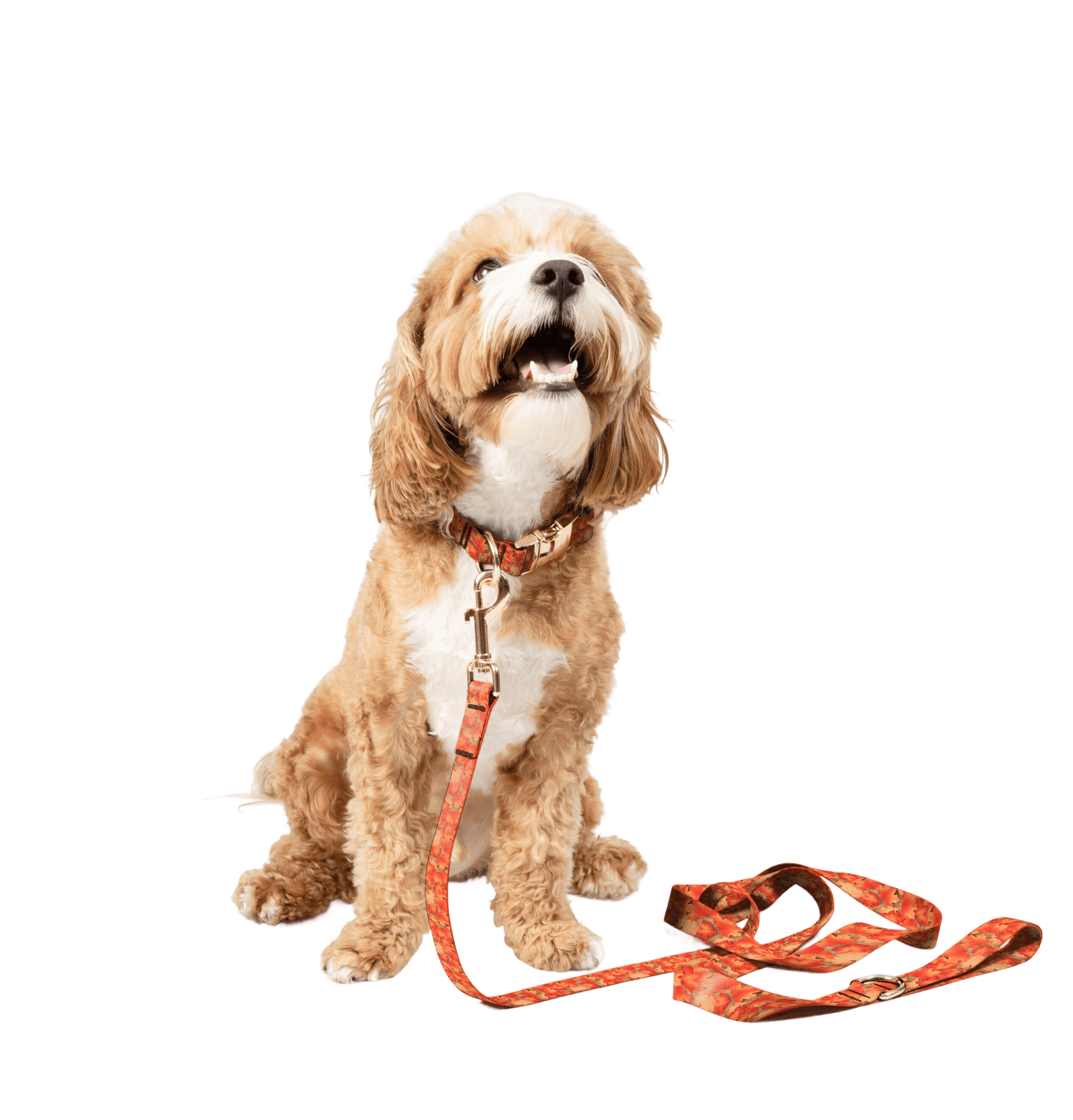
A collar is the one piece of gear your dog wears every single day. Get the fit wrong and you end up with rubbing, slipping over the head, or a coat worn smooth in a ring. Get it right and most dogs forget it's there.
Here's exactly how we recommend measuring — the same method we use for every Amu collar.
What you need
- A soft tailor's tape measure (the cloth kind from a sewing kit)
- A treat or two to keep your dog still
- 60 seconds
If you don't have a tailor's tape, use a piece of string and then lay it against a ruler. Don't try to wrap a rigid metal tape around your dog's neck — you won't get an accurate number, and it's miserable for them.
The two-finger rule
The classic fit test: when the collar is on, you should be able to slide two fingers flat between the collar and your dog's neck. Not one (too tight, restricts breathing and rubs). Not three (loose — they can back out of it on a startle).
Measure with this in mind. We're not measuring the bare neck — we're measuring where the collar will actually sit, with a small amount of breathing room built in.
Step-by-step
- Find the natural collar spot. That's the base of the neck, just above the shoulders — not up under the jaw. Most dogs wear the collar slightly lower than people expect.
- Wrap the tape snugly around the neck. It should sit flush against the coat, but you shouldn't be compressing the fur or skin.
- Slide two fingers under the tape. Adjust until you have two fingers' worth of room — flat against the neck, not stacked.
- Note the number. That's your collar length. If you're between sizes, size up. A collar that's a touch loose is safer than one that's a touch tight.
What about puppies?
Puppies grow fast — sometimes a full size in a month. Two practical options:
- Buy a size up with extra adjustment range. Most quality collars have 3–4 inches of adjustment. Buy the size whose middle hole matches your current measurement, and you have room to grow.
- Plan to replace once. Get a small, comfortable starter collar for the first 4–6 months, then a "real" collar once they're closer to adult size. It costs a bit more, but a too-large collar on a puppy is a real escape risk.
For breeds with a wide adult-vs-puppy gap (Great Danes, Mastiffs, Newfoundlands), it's almost always worth a starter collar.
Breed-specific notes
- Sighthounds (greyhounds, whippets, Italian greyhounds): Their heads are narrower than their necks, so a standard collar can slip off backwards. A martingale or wide "house" collar is much safer.
- Pugs, French bulldogs, Boston terriers: Short necks and tracheal sensitivity. A wide, padded collar distributes pressure, and we often recommend pairing with a harness for walks.
- Long-coated breeds (collies, golden retrievers, Pomeranians): Measure after a recent brush. Matted fur can throw the measurement off by half an inch in either direction.
- Very young or very old dogs: Skin is more fragile. Err generous on the fit and check weekly.
A note on weight
Don't size a collar by your dog's weight. A 50-pound boxer and a 50-pound border collie have very different necks. Always measure.
Caring for the fit
Necks change. Coats shed seasonally, dogs gain or lose weight, puppies grow. Check the two-finger rule once a month for adult dogs, weekly for puppies. A five-second habit that prevents a lot of small problems.
Made for the bond. Every Amu collar is hand-stitched in small batches and custom-fit to your measurement. Make their collar →