Loose-leash walking: 5 simple cues that actually work
Most loose-leash advice assumes you have a quiet field and a clicker. Here are five cues that work on a regular Tuesday walk in a regular city.
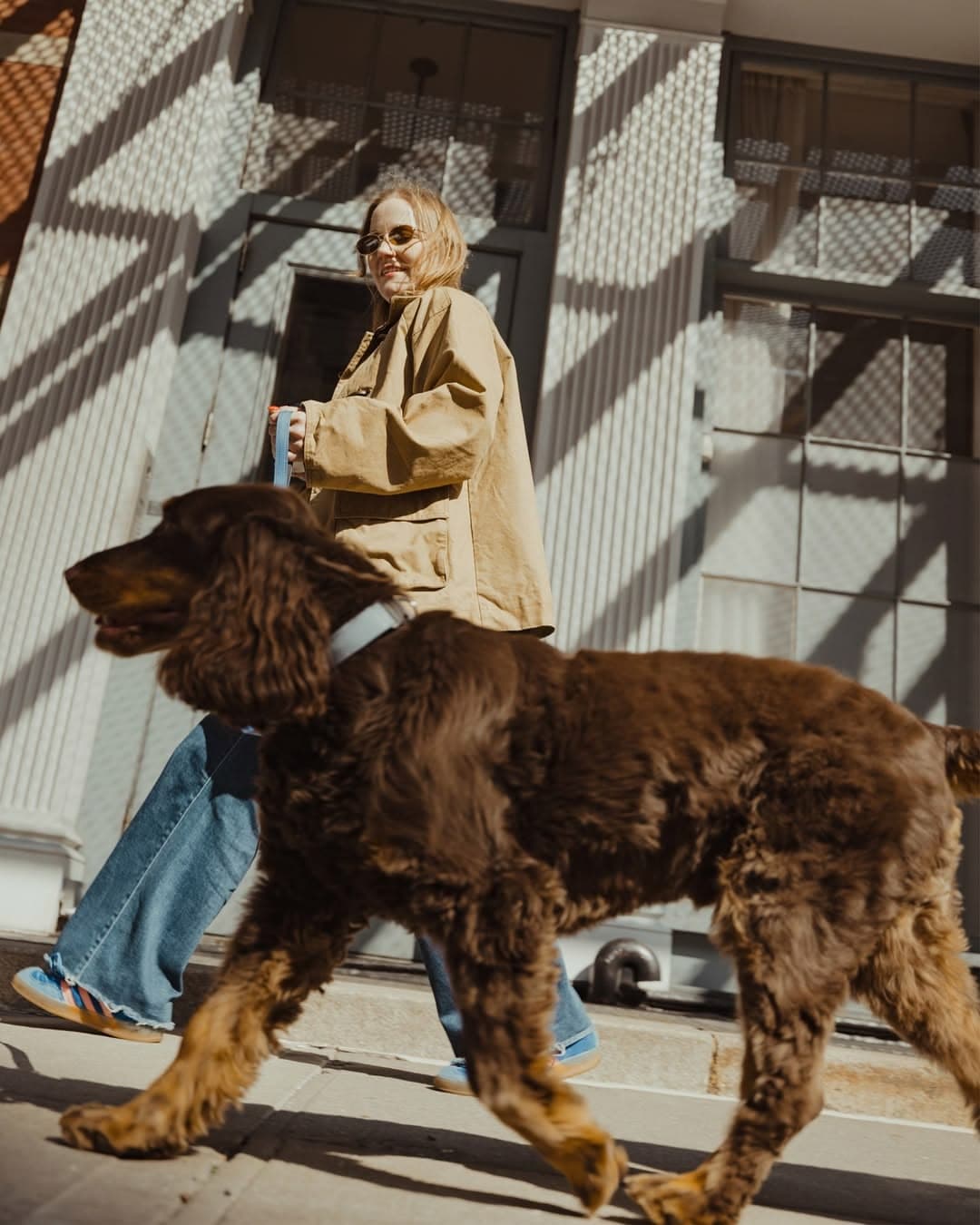
You don't need a clicker, a quiet field, or 60 minutes a day to teach a dog to walk politely on leash. You need a handful of cues, consistency, and patience that survives the first week. Here are the five we come back to most.
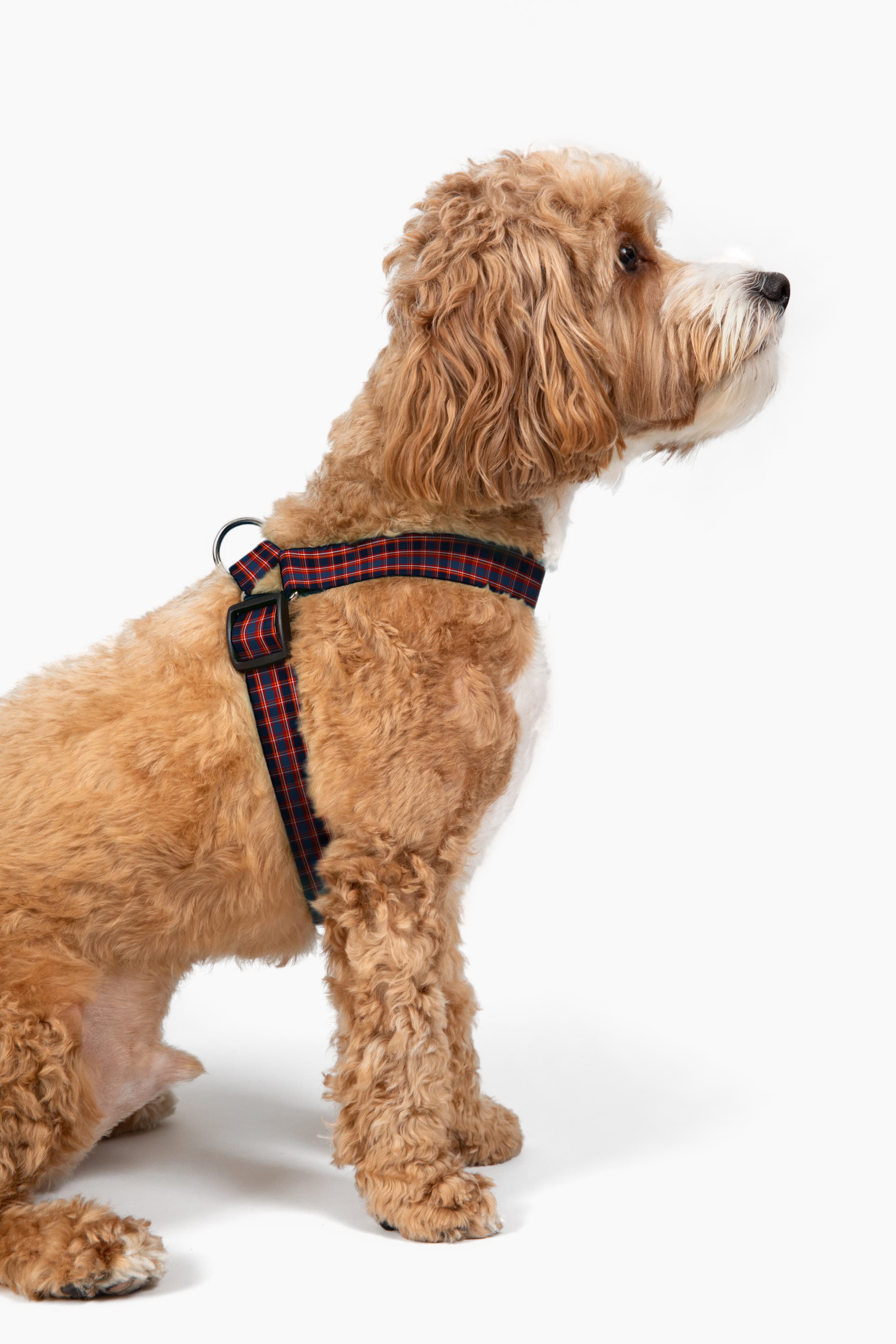
Quick note: these work best with a flat collar or a Y-front harness. A retractable leash undermines almost every loose-leash technique — use a 4 to 6 foot fixed leash for training.
1. Be a tree
When your dog pulls, stop walking. Don't yank back, don't say anything. Just stop. The leash goes taut and nothing happens. The moment your dog looks back at you or the leash goes slack, walk again.
It's slow at first. The first block of a walk might take 15 minutes. But your dog learns: pulling = no forward motion. Slack = movement. This is the foundation of everything else.
2. Change of direction
Walking forward, your dog drifts ahead. Without saying anything, you do a slow 180 and walk the other way. The dog now has to catch up.
This works because it puts the responsibility for paying attention back on the dog. It also short-circuits the "freight train" pattern where they barrel forward on autopilot. We use this 5–10 times a walk early in training.
3. The check-in marker
Pick a word — "yes," "good," whatever. Use it the instant your dog looks back at you on a walk, then reward (treat, scratch, "let's go!"). You're teaching them: checking in pays.
After a week or two, you have a dog who naturally glances at you every 30–60 seconds, which makes every other cue work better. This is the single highest-ROI training habit we know of.
4. The reset cue
Pick a phrase — "let's go" or "with me." Use it when you're about to start walking, after a stop, after a 180, anytime you want re-engagement. Always followed by movement, so the dog learns it predicts forward motion.
This becomes your "we're walking now, eyes on me" cue. Over time you can use it preemptively before high-distraction zones (other dogs, squirrel spots, that one mailbox).
5. The decompression sniff
Counterintuitive, but the most underused tool: scheduled sniff breaks. Pick a spot every couple of blocks where you stop and let your dog sniff freely for 60 seconds. Loose leash, no cues, just dog time.
Dogs pull partly because they want to sniff and we don't let them. Building sniffing into the walk lowers the urgency and makes loose-leash walking the default the rest of the time. Counterintuitively, walks become faster overall.
A realistic timeline
- Week 1: Slow, frustrating. Block one of the walk is mostly "be a tree." You'll question whether it's working.
- Week 2: First moments of slack leash. Dog starts checking in on their own.
- Week 4: Good stretches on familiar routes. Still bumpy with novelty.
- Week 8: Most walks are loose-leash with occasional resets.
- Forever: Reinforce the check-in marker. It's the long-tail behavior that pays for itself.
What gear helps
A well-fitted harness (see harness vs collar) takes the pressure off the trachea while you're working through this. A standard 5-foot leash with a comfortable handle. Treats your dog actually cares about — for most dogs that means small, soft, smelly. Cheese works.
What doesn't help: retractable leashes, choke chains, prong collars on untrained dogs, or any gear that punishes pulling without teaching the alternative.
Every Amu set — collar, harness, leash — is made to fit and built to last through training-week one and forever after. Make their walkware →